

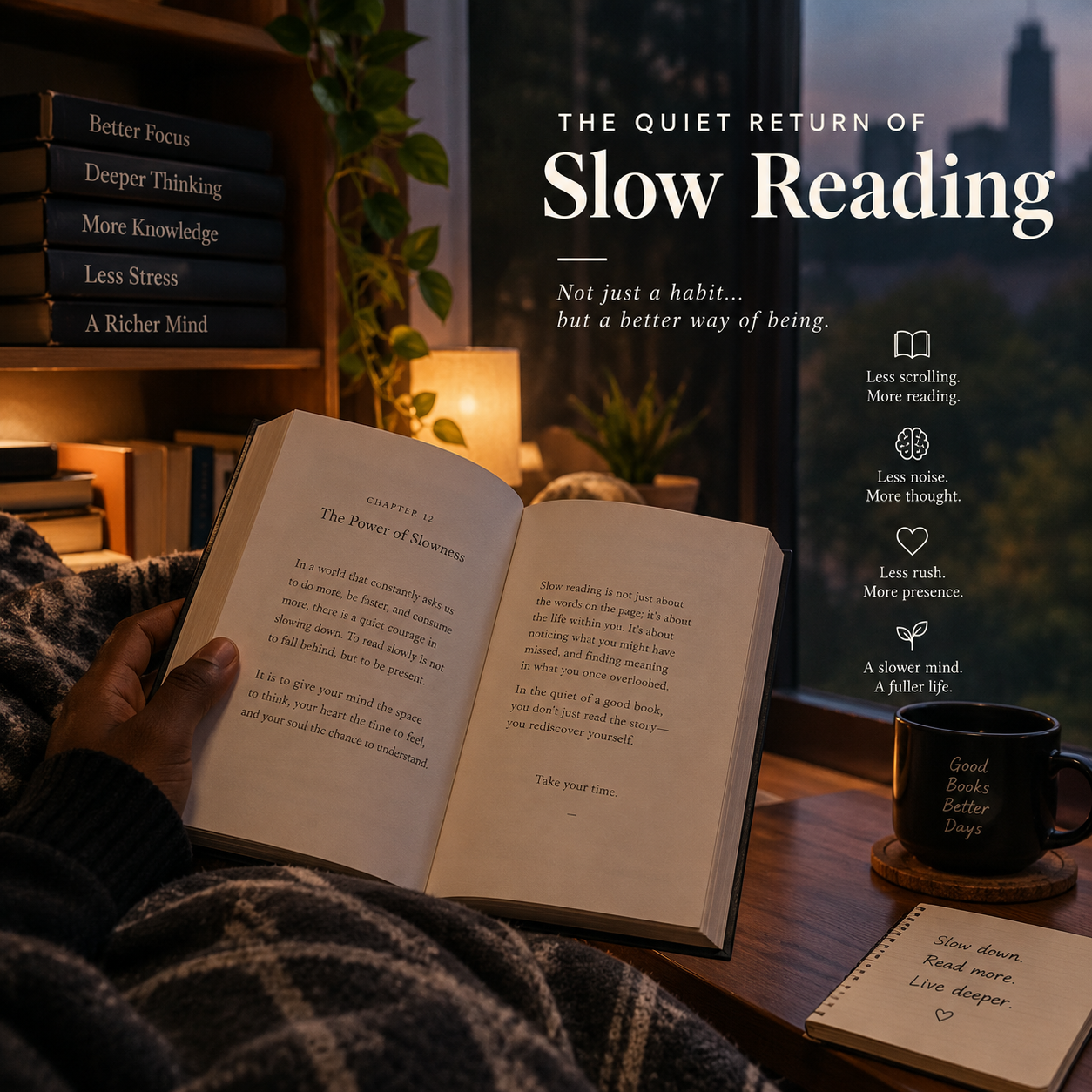
For a decade we trained our eyes to skim. Headlines became glances, paragraphs became scroll fodder, and the long essay was declared a casualty of the feed. Yet something has shifted: readers are quietly returning to slow reading, and they are bringing high standards with them.
ATTENTION IS A CRAFT,NOT A TRAIT
We often talk about attention as if it were a fixed supply, drained by phones and refilled by willpower. It behaves more like a muscle. Give it a clear structure, a voice worth following and room to breathe, and it stretches. Give it clutter, and it quits within seconds. The difference is rarely the topic; it is the care taken on the page.
THE SOLUTION EDITORS CAN DO ABOUT THIS ISSUE
Start with the headline, which should promise one thing and keep it. Break long arguments with subheadings that work as signposts, not decoration. Use images to slow the eye rather than to fill space, and describe each one in words so every reader, and every search engine, understands what it adds. Make every later section earn that promise. Thirty to forty characters is enough room to be exact.Finally, edit the opening until the first paragraph states the point. Cut the throat-clearing, name the subject early, and read the draft aloud once. Wherever you stumble, a reader will too. Essays that hold attention usually do so by being complete, not by being long.None of this is nostalgia. It is a practical bet that readers who stay longer return more often, and that clarity is still the most persuasive design we have. The slow read is not a retreat from the web; it is the web, finally paying attention back.with this method, people can develop sharper minds and efficient recalling brains ,which will lead to the solution of other problems.