

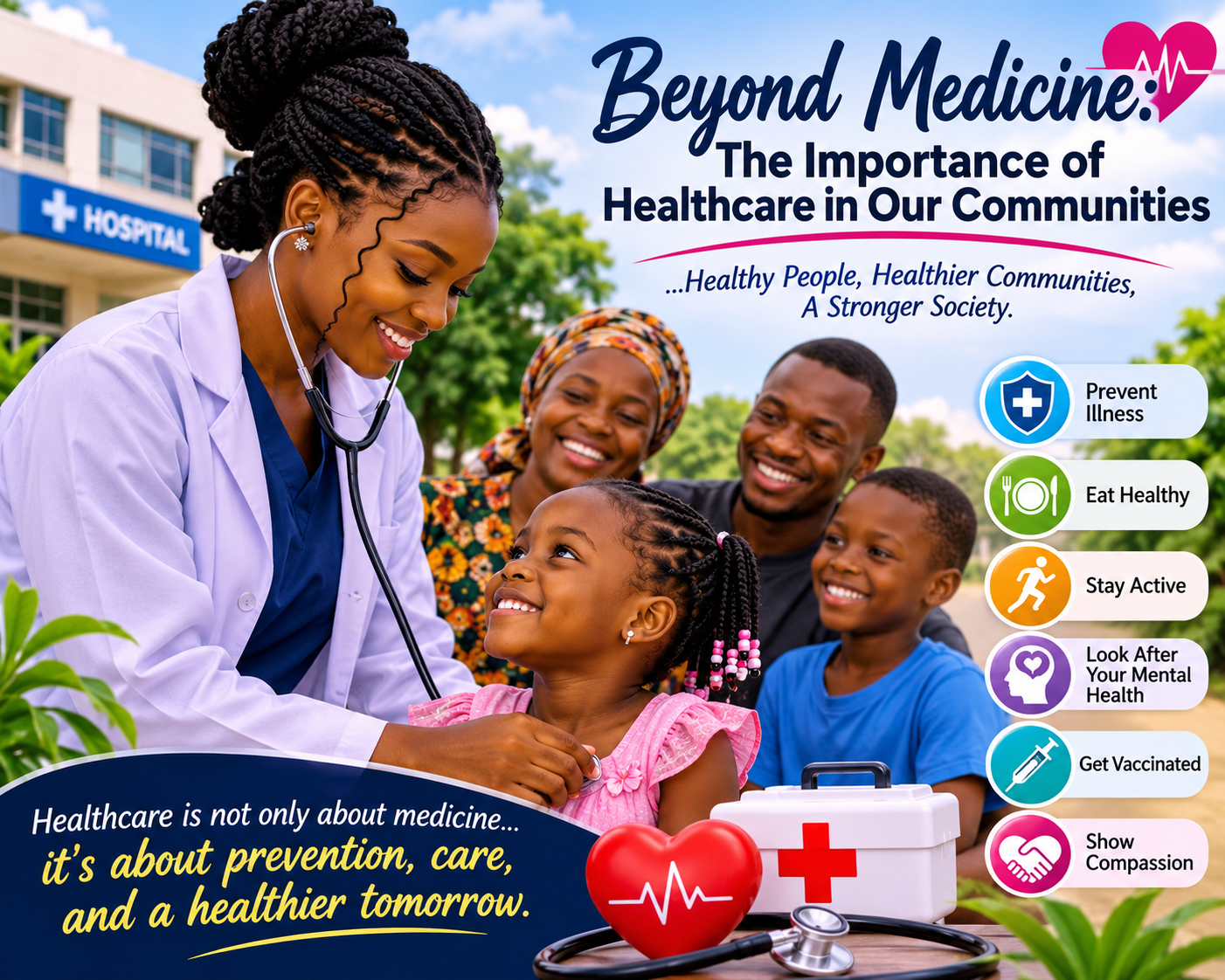
Beyond Medicine: The Importance of Healthcare in Our Communities
When people hear the word healthcare, they often think of hospitals, doctors, medicines and injections. While these are important parts of healthcare, healthcare goes far beyond treating people when they become sick. It is also about preventing illness, promoting healthy living, providing support and helping communities live better lives.
A healthy community is built not only inside hospitals but also in homes, schools and other everyday environments. Clean water, proper sanitation, good nutrition and a safe environment all play an important role in keeping people healthy. When these basic needs are lacking, people may become sick more often, regardless of how many hospitals are available.
Healthcare professionals also have an important role beyond diagnosing and treating diseases. They educate people about healthy habits, encourage early check-ups and help communities understand how certain illnesses can be prevented. Sometimes, simple information can make a significant difference. Teaching people the importance of washing their hands, eating balanced meals, getting vaccinated and seeking medical attention early can help prevent serious health problems.
Mental and emotional well-being are equally important. A person may appear physically healthy while silently struggling with stress, fear or other emotional difficulties. This is why a truly effective healthcare system should recognise the importance of supporting the whole person, not just treating physical symptoms. People need to feel heard, respected and cared for.
Healthcare is also closely connected to compassion. A patient may forget the name of a medicine they were given, but they are likely to remember how they were treated. Kindness, patience and respect can make a difficult experience easier for someone who is already worried about their health. Good healthcare therefore requires not only knowledge and skill but also humanity.
Communities also have a role to play. Health should not be seen as the responsibility of healthcare workers alone. Families, teachers, leaders and individuals can all contribute by promoting healthy choices and supporting one another. When people work together to create cleaner, safer and more informed communities, everyone benefits.
In the end, healthcare is about more than medicine. It is about prevention, education, compassion, support and creating conditions that allow people to live healthier lives. Hospitals and medicines will always be essential, but the future of healthier communities depends on looking beyond treatment and understanding that health begins in the way we live, care for one another and support the people around us.
Healthcare is not only about adding years to life; it is also about adding life to those years.