

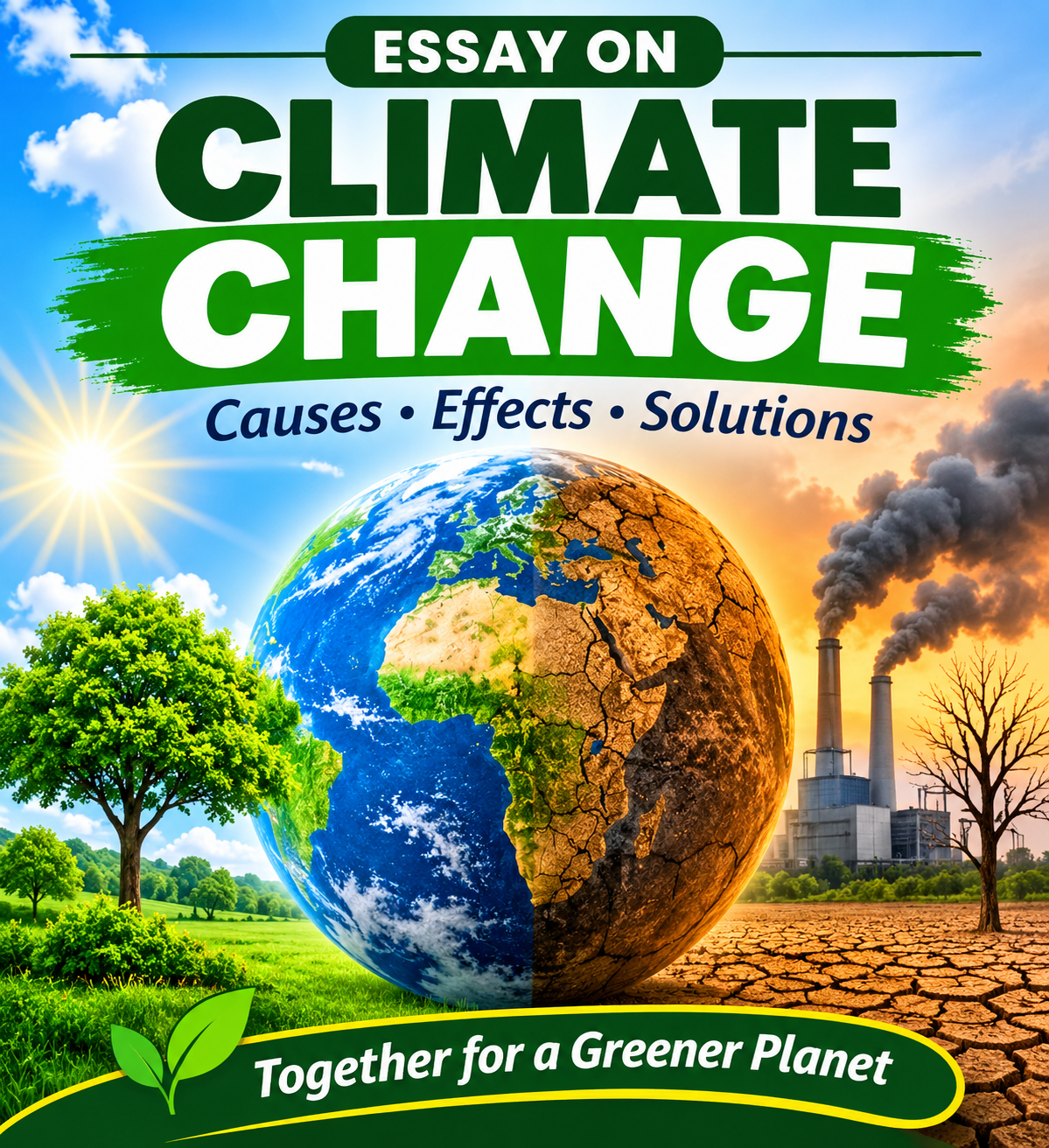
Climate change is one of the greatest challenges facing the world today. It refers to long-term changes in the Earth's temperature and weather patterns. Although climate change can occur naturally, human activities have greatly accelerated it through the emission of greenhouse gases. Activities such as deforestation, industrialisation, burning fossil fuels and environmental pollution contribute significantly to global warming. Climate change affects human beings, animals, plants and the environment. Therefore, urgent measures must be taken to reduce its effects and protect the planet for future generations.
### Causes of Climate Change
There are several major causes of climate change:
1\. Deforestation: Cutting down trees reduces the amount of carbon dioxide absorbed from the atmosphere, contributing to global warming.
2\. Burning fossil fuels: The use of coal, petroleum and natural gas in industries, vehicles and electricity production releases greenhouse gases into the atmosphere.
3\. Industrial activities: Factories release harmful gases and pollutants that contribute to the greenhouse effect.
4\. Agricultural activities: Livestock farming, fertiliser use and certain farming practices release methane and nitrous oxide, which contribute to global warming.
5\. Environmental pollution: Poor waste disposal, burning rubbish and other human activities release gases that contribute to climate change.
### Effects of Climate Change
Climate change has serious effects on the environment and human life.
1\. Drought: Rising temperatures and changing rainfall patterns cause prolonged droughts, resulting in water shortages and crop failure.
2\. Flooding: Heavy and unpredictable rainfall causes floods that destroy homes, roads, bridges and farmland.
3\. Food insecurity: Changes in weather patterns reduce agricultural production, leading to food shortages and increased food prices.
4\. Loss of biodiversity: Many animals and plant species struggle to survive as their natural habitats and environmental conditions change.
5\. Rising temperatures: Increased global temperatures cause heatwaves, which can lead to health complications and even death.
6\. Rising sea levels: Melting glaciers and the expansion of warming oceans contribute to rising sea levels, threatening coastal communities.
7\. Spread of diseases: Changing temperatures and rainfall patterns can increase the spread of certain diseases, including malaria.
### Solutions to Climate Change
Several measures can be taken to address climate change:
1\. Afforestation and reforestation: Planting more trees and protecting existing forests helps absorb carbon dioxide from the atmosphere.
2\. Use of renewable energy: Governments and individuals should promote solar, wind and geothermal energy instead of relying heavily on fossil fuels.
3\. Environmental conservation: People should protect forests, wetlands, rivers and other natural resources.
4\. Proper waste management: Recycling, reusing materials and avoiding unnecessary burning of rubbish can help reduce pollution.
5\. Public education: Governments, schools and environmental organisations should educate people about climate change and environmental protection.
6\. Sustainable agriculture: Farmers should adopt environmentally friendly farming methods that conserve water and protect the soil.
7\. Government policies: Governments should introduce and enforce laws that control industrial emissions, illegal logging and environmental destruction.
### Conclusion
In conclusion, climate change is a serious global problem that requires immediate attention. Its effects are already being experienced through droughts, floods, rising temperatures, food shortages and the destruction of natural habitats. Both individuals and governments have a responsibility to protect the environment. By planting trees, conserving natural resources, adopting renewable energy and reducing pollution, we can minimise the effects of climate change. Protecting the environment today means securing a better and safer future for generations to come.